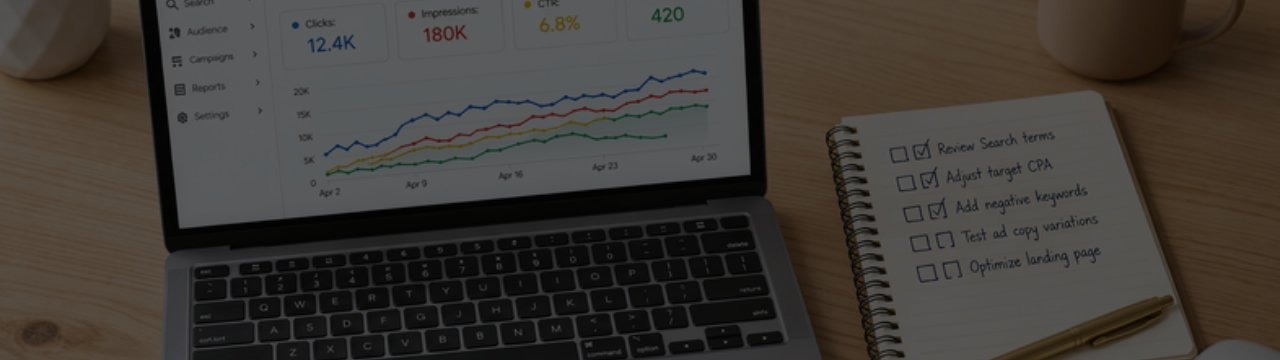
Switching on a new PPC campaign is the moment your budget starts working, or starts leaking. Many of the problems we find when auditing Google Ads accounts could have been caught with a simple PPC campaign checklist, before a single click was paid for: tracking that does not record enquiries, keywords that attract the wrong searchers, or ads that send people to a page that does not help them act.
Whether you run PPC in-house or work with an agency, the eight checks below will help you launch with confidence and give every pound of ad spend a fair chance to perform.
Your PPC campaign checklist at a glance
- A clear, measurable objective
- Conversion tracking set up and tested
- Keywords matched to search intent
- Negative keywords in place
- A simple, logical campaign structure
- Budget, bidding and targeting settings checked
- Ads, assets and landing pages that work together
- A plan for reviewing results
1. Is the objective clear and measurable?
Start by deciding the one action you want people to take: an enquiry, a sale, a phone call or a booking. That objective shapes everything that follows, from the campaign type you choose to the bid strategy and the numbers you report on.
Be specific. “More leads” is hard to judge. “Enquiries from businesses in Essex at a cost we can afford” gives you a benchmark to work towards. It also helps to know what a lead or sale is worth to you, so you can tell whether the campaign is paying its way.
2. Is conversion tracking set up and tested?
This is the check most often missed, and the one that matters most. If Google Ads cannot see which clicks turn into enquiries or sales, you cannot judge performance, and automated bid strategies have nothing useful to learn from.
Before launch, make sure your key actions, such as form submissions, calls and purchases, are recorded as conversions in Google Ads, and that Google Analytics 4 is linked to your account. Then test them: submit your own form, make a test call and check that each action appears. Our guide to Google Analytics 4 explains more about how GA4 records activity on your website.
3. Do the keywords match what searchers want?
Think about what someone is trying to do when they type each search term. “What is PPC” suggests someone learning. “PPC agency Essex” suggests someone ready to talk to a supplier. Your keywords should reflect the intent behind your objective, not just the topic.
Keyword match types matter too. Broad match can reach a wide range of related searches, which works well with strong conversion data behind it but can waste budget on a new campaign. Phrase and exact match give you more control while you learn what works.
4. Have you added negative keywords?
Negative keywords stop your ads appearing for searches you do not want to pay for. Common examples include “free”, “jobs”, “course” or “DIY”, depending on what you sell. Building a starter negative list before launch, then adding to it from the search terms report, is one of the simplest ways to protect your budget. Google’s own guide to negative keywords explains the options in more detail.
5. Is the campaign structure easy to follow?
A clear structure makes an account easier to manage and easier to understand. Group closely related keywords together so each ad group can have ads written specifically for those searches. Then choose the campaign type that suits your goal: Search for people actively looking, Shopping for product-led retailers, or Performance Max for reaching people across Google’s channels. If you sell products online, our article Does my business need Google Shopping? looks at whether Shopping is right for you.
If an agency is setting up your account, ask them to explain the structure and why it suits your business. You should be able to follow it.
6. Are your budget, bidding and targeting settings right?
Check that the daily budget reflects what you are prepared to spend over the month, and that the bid strategy suits the data you have. Strategies such as Maximise conversions rely on conversion data, so a brand-new account may need time, or a simpler starting strategy, before automation can do its best work.
Then look closely at targeting. By default, Google can show your ads to people who have shown interest in your chosen locations as well as people who are actually there. If you only serve a local area, consider changing the location option to people in, or regularly in, your chosen locations. It is also worth reviewing your ad schedule, language and device settings, so you are not paying for clicks at times or in places you cannot serve.
7. Do your ads, assets and landing page work together?
Your ad should reflect the search that triggered it and give people a clear reason to click. Use assets (formerly known as extensions), such as sitelinks, callouts and call assets, to add useful detail and make your ad more prominent.
Then follow the click. The landing page should continue the conversation the ad started, load quickly on mobile and make the next step obvious. Sending every ad to your homepage is rarely the best option. If your pages are not helping visitors take action, our website design team can help.
8. How will you review the results?
The first few weeks after launch are when you learn the most. Agree how often you will check performance and what you will look at: conversions, cost per conversion and the search terms report, not just clicks and impressions. Expect to make adjustments as real data comes in.
If performance does not match expectations, our article 5 reasons your PPC campaign isn’t performing covers the most common causes and how to fix them.
Why a PPC campaign checklist is only the start
PPC does not work in isolation. It performs best when it is aligned with your wider marketing plan, your website and your budget. Running through this PPC campaign checklist before launch means your campaign starts on solid ground, and you will have the data to make confident decisions from day one.
redPepper Marketing manages PPC campaigns for businesses across Essex and beyond. Find out more about our PPC management service, or if you would like a second pair of eyes before you launch, book a meeting with our team.
Planning a PPC campaign?
Let’s talk about how we can help you launch with confidence.